Skeletal Strength Under the Microscope: Evaluating Clinical Evidence for MK-677's Effects on Bone Density and Fracture Outcomes
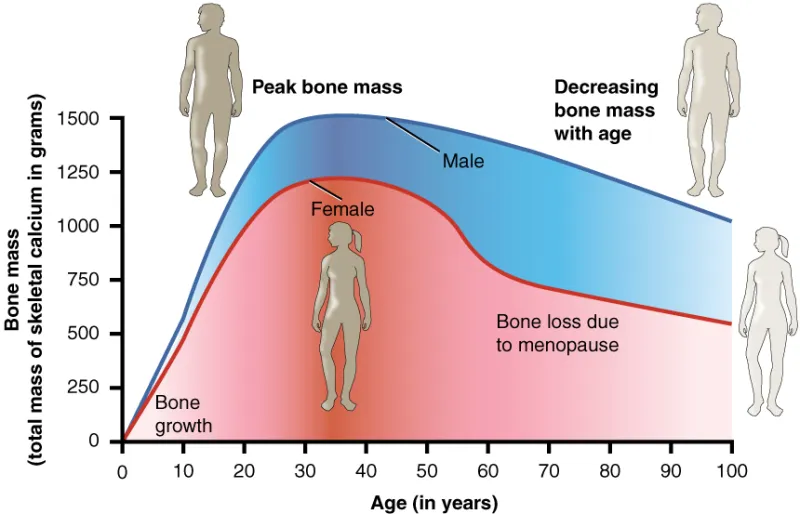
Photo: Anatomy & Physiology, Connexions Web site. http://cnx.org/content/col11496/1.6/, Jun 19, 2013., CC BY 3.0, via Wikimedia Commons
Among the various physiological domains touched by MK-677 research, bone health occupies a position of particular clinical relevance. The United States faces a well-documented burden of osteoporosis and fragility fractures, with the National Osteoporosis Foundation estimating that approximately 10 million Americans have the condition and another 44 million have low bone density. Against that backdrop, any compound that demonstrably influences skeletal remodeling warrants careful, evidence-based scrutiny—neither dismissal nor uncritical enthusiasm.
MK-677's relationship with bone physiology is anchored in its primary mechanism: stimulation of endogenous growth hormone (GH) secretion and the consequent rise in insulin-like growth factor 1 (IGF-1). Both hormones play integral roles in bone metabolism throughout life, making the compound a scientifically credible candidate for skeletal research. What follows is a structured examination of what clinical and preclinical data actually show.
The Biological Connection Between GH, IGF-1, and Bone
Bone is a dynamic tissue, perpetually renewed through the coordinated activity of osteoblasts (bone-forming cells) and osteoclasts (bone-resorbing cells). GH and IGF-1 exert direct anabolic effects on osteoblasts, stimulating their proliferation, differentiation, and collagen synthesis. IGF-1 receptors are expressed on osteoblast precursors, and activation of those receptors promotes the deposition of new bone matrix—a process fundamental to maintaining or increasing bone mineral density (BMD).
GH deficiency in adults is well-recognized as a cause of reduced BMD and elevated fracture risk, and GH replacement therapy in deficient individuals reliably improves skeletal outcomes over multi-year treatment periods. Because MK-677 elevates both GH and IGF-1 through endogenous mechanisms, researchers have reasonably hypothesized that it could replicate or approximate some of these skeletal benefits—particularly in populations where age-related GH decline contributes to bone loss.
What Clinical Trials Have Demonstrated
The most frequently cited clinical evidence for MK-677's skeletal effects comes from trials conducted in older adults, a population in whom the compound's GH-restorative properties are most pharmacologically relevant.
A landmark study published in the Journal of Clinical Endocrinology & Metabolism examined the effects of MK-677 in elderly men and women over a two-year period. The trial documented sustained elevations in serum IGF-1 and GH throughout the treatment duration. Bone turnover markers—biochemical indicators of osteoblast and osteoclast activity—increased during the treatment period, suggesting that MK-677 was actively stimulating skeletal remodeling rather than simply suppressing resorption, as many conventional osteoporosis medications do.
Importantly, the increase in bone turnover markers observed in early treatment phases is not equivalent to an immediate gain in BMD. Bone remodeling is a slow process; newly formed bone requires months to fully mineralize. This biological timeline means that short-duration studies may actually show a transient decrease or plateau in measured BMD even when the underlying remodeling process is accelerating in a favorable direction. Researchers interpreting BMD data from MK-677 trials must account for this lag effect.
A separate study examining MK-677 in hip fracture patients—a population representing one of the most clinically urgent bone health scenarios—found that the compound improved functional outcomes and body composition, though its direct effects on bone healing and subsequent fracture risk in that cohort were not the primary endpoint and remain incompletely characterized.
Osteoblast Activity and Bone Formation Markers
Several studies have examined serum markers of bone formation, including osteocalcin and procollagen type I N-terminal propeptide (P1NP), in subjects receiving MK-677. Elevations in these markers have been observed across multiple trials, consistent with the expected downstream effects of IGF-1 on osteoblast function. These biochemical signals are considered surrogate endpoints for bone formation activity and provide mechanistic support for the hypothesis that MK-677 promotes anabolic skeletal remodeling.
However, the relationship between elevated bone turnover markers and long-term fracture risk reduction is not linear. High bone turnover, even when predominantly anabolic, can temporarily reduce the material quality of bone as newly deposited matrix awaits full mineralization. This nuance is frequently overlooked in non-clinical discussions of MK-677 and bone health, and it underscores the importance of distinguishing between short-term biomarker changes and clinically meaningful fracture outcomes.
Fracture Risk Reduction: What the Data Can and Cannot Claim
Fracture prevention is the ultimate clinical endpoint in bone health research, yet it is also the most demanding to establish. Demonstrating that a compound reduces fracture incidence requires large, long-duration randomized controlled trials with fracture events as primary endpoints—studies that are expensive, logistically complex, and time-consuming.
To date, no published clinical trial has used fracture incidence as a primary endpoint for MK-677. The available evidence supports plausible biological mechanisms and favorable changes in surrogate markers, but it does not yet permit a definitive claim that MK-677 reduces fracture risk in any population. This distinction is critical for researchers and clinicians assessing the compound's potential role in skeletal health management.
Comparison with established osteoporosis therapies—bisphosphonates, denosumab, teriparatide—is instructive here. Each of those agents has demonstrated fracture risk reduction in large randomized trials. MK-677 has not yet been evaluated at that level of clinical rigor for skeletal endpoints. Its mechanistic profile is promising, but mechanistic promise and clinical efficacy are not interchangeable.
Populations of Particular Research Interest
Among the demographics where MK-677's skeletal effects warrant the most focused investigation, two stand out in the US context. First, older adults with age-related GH decline represent a population in whom restoring more youthful GH pulsatility could theoretically slow trabecular bone loss—a hypothesis supported by existing GH replacement literature. Second, individuals with hip fractures or recovering from orthopedic procedures may benefit from the combined effects of MK-677 on bone turnover and lean mass preservation during rehabilitation.
Additionally, postmenopausal women—who face accelerated bone loss due to estrogen withdrawal—represent an underexplored population for MK-677 research. Given that GH secretion also declines with age in women, and that IGF-1 is an established modulator of osteoblast activity, there is scientific rationale for investigating MK-677 in this cohort, though clinical data specific to postmenopausal bone outcomes remains limited.
Identifying the Research Gaps
The existing literature on MK-677 and bone health, while directionally informative, leaves several questions unanswered. Longer-duration trials specifically designed to measure BMD changes—ideally over 24 to 36 months—are needed to move beyond the early remodeling phase captured in most published studies. Fracture incidence data, even as a secondary endpoint in larger trials, would substantially strengthen the evidentiary base.
Additionally, direct comparisons between MK-677 and established bone-active agents would help contextualize the compound's clinical relevance, as would studies that stratify outcomes by baseline IGF-1 levels, since individuals with lower starting IGF-1 may respond differently than those with normal-range values.
A Measured Assessment
The clinical evidence situates MK-677 as a biologically plausible modulator of bone metabolism, with documented effects on GH secretion, IGF-1 elevation, and bone turnover markers that align with the expected consequences of enhanced osteoblast activity. These findings are scientifically meaningful and justify continued investigation, particularly in aging populations where skeletal fragility represents a genuine public health concern.
What the evidence does not yet support is a clinical recommendation for MK-677 as a fracture prevention strategy. The gap between mechanistic plausibility and proven clinical efficacy is substantial and should not be minimized. For researchers at MK677 Lab and beyond, the most accurate characterization of the current state of knowledge is this: the skeletal biology is compelling, the clinical foundation is preliminary, and the research agenda ahead is both important and incomplete.