Read the Fine Print: Five Ways MK-677 Abstracts Mislead Even Careful Researchers
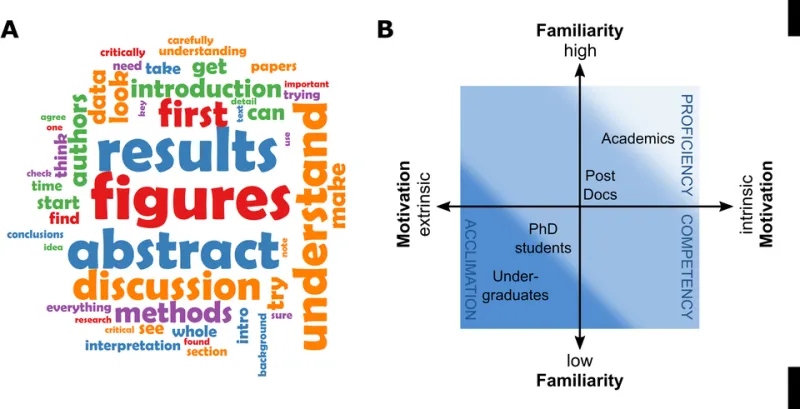
Photo: Authors of the study: Katharine E. Hubbard, Sonja D. Dunbar, CC BY 4.0, via Wikimedia Commons
Abstracts are the gateway to most scientific literature. They are also, in the case of MK-677 research, a reliable source of confusion. The compound's mechanism — ghrelin receptor agonism driving growth hormone release — sits at enough biological distance from its measured outcomes that a casual abstract skim can produce conclusions the data never supported. Below are five misreadings that show up repeatedly, each paired with what the underlying evidence actually indicates.
1. Confusing Receptor Binding With GH Output
The abstract says: MK-677 "binds the ghrelin receptor with high affinity."
What people hear: MK-677 reliably elevates growth hormone.
What the data shows: Binding affinity describes a molecular interaction, not a physiological result. GH release following secretagogue administration varies with dose, timing relative to circadian rhythms, age of the subject, and the integrity of the somatostatin feedback system. A binding study tells you nothing about how much GH a 60-year-old subject will secrete after four weeks of dosing. Treat receptor pharmacology and endocrine outcomes as entirely separate evidence tiers.
2. Mistaking Surrogate Markers for Clinical Outcomes
The abstract says: MK-677 "increased serum IGF-1 and lean body mass."
What people hear: MK-677 improves strength, function, or health.
What the data shows: IGF-1 is a surrogate. Lean mass measured by DEXA can include water retention. In the largest trial of its kind — a two-year study in older adults with hip fracture — MK-677 raised IGF-1 and lean mass without improving function or reducing falls. When an abstract reports markers, ask whether any functional, hard endpoint was measured at all.
3. Ignoring Who Was in the Trial
The abstract says: "Healthy volunteers received 25 mg daily."
What people hear: These results apply to healthy adults generally.
What the data shows: Age fundamentally alters both the GH axis and metabolic risk. Trials in young subjects can't be extrapolated to older populations and vice versa. The same 25 mg dose that produces a robust GH pulse in a 25-year-old produces a blunted response in a 65-year-old — while carrying greater glucose-metabolic liability. Subject demographics belong in the first sentence of your mental summary, not the last.
4. Treating Short-Term Data as Long-Term Evidence
The abstract says: "After six weeks, significant improvements were observed."
What people hear: MK-677's effects are established.
What the data shows: Six weeks is enough time to detect hormonal shifts, but not enough to observe whether those shifts translate, reverse, or generate compensatory problems. Insulin resistance, for example, tends to emerge and worsen over months. Duration is a variable, not a detail.
5. Reading Statistical Significance as Practical Significance
The abstract says: A "statistically significant" change in a measured parameter.
What people hear: A meaningful change occurred.
What the data shows: With small samples, statistical significance can coexist with effect sizes too small to matter clinically. Conversely, in underpowered studies, a real effect can miss significance entirely. Check the confidence intervals and the magnitude of change before deciding what an abstract's bottom line is worth.
The Broader Lesson
None of these errors requires bad faith — they arise from the necessary compression of abstracts and the enthusiasm of readers hoping the data says more than it does. The discipline is simple: locate the subjects, the duration, the endpoints, and the effect sizes before forming a conclusion. In MK-677 research, the gap between what an abstract appears to claim and what a full paper demonstrates is often the most important finding of all.