Does MK-677 Actually Sharpen the Mind? Evaluating the Neurological Evidence Behind Growth Hormone and Cognitive Performance
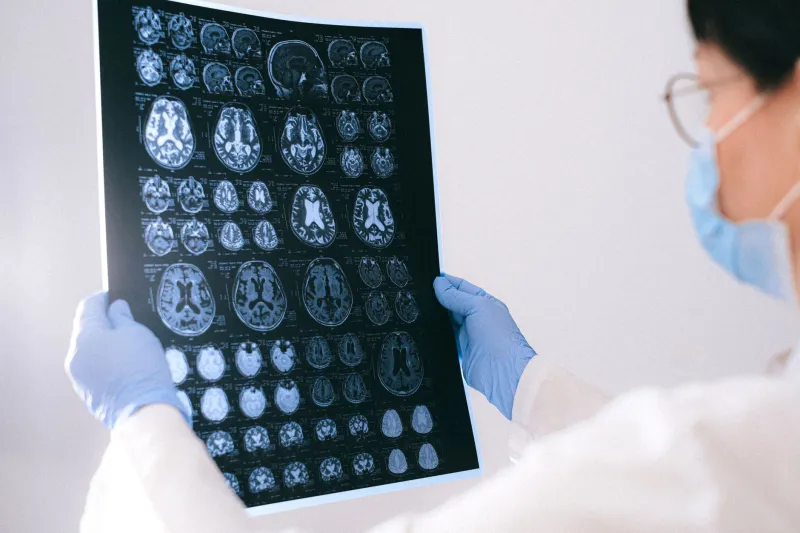
Among the many proposed applications of MK-677, cognitive enhancement occupies a peculiar position: it is simultaneously one of the most discussed and least rigorously examined. Online research communities in the United States and elsewhere are filled with anecdotal accounts of improved memory, sharper focus, and enhanced mental clarity following MK-677 administration. Yet when researchers turn to the peer-reviewed literature for confirmation, the evidentiary landscape becomes considerably thinner. Understanding what the science actually supports—and where it remains silent—requires a careful separation of preclinical promise from clinical reality.
Growth Hormone's Role in the Brain: What Preclinical Research Establishes
The biological rationale for a GH-cognition connection is not without foundation. Growth hormone receptors are expressed throughout the central nervous system, including in regions critical to learning and memory such as the hippocampus and prefrontal cortex. In rodent models, GH administration has been associated with enhanced neurogenesis in the hippocampal dentate gyrus, improved spatial memory performance, and attenuation of age-related cognitive decline. IGF-1, the downstream mediator of many GH effects, crosses the blood-brain barrier and has demonstrated neuroprotective properties in multiple preclinical contexts, including reduced amyloid burden in Alzheimer's models and protection against oxidative neuronal damage.
Ghrelin itself—the endogenous ligand for the receptor MK-677 activates—has also been implicated in hippocampal synaptic plasticity and long-term potentiation, the cellular mechanism most closely associated with memory consolidation. These converging signals from preclinical neuroscience create a plausible theoretical framework: if MK-677 elevates GH and IGF-1 while also engaging ghrelin receptors in the brain, some degree of cognitive benefit might be expected.
The problem is that plausibility is not proof, and animal models of cognition translate to human outcomes with frustrating inconsistency.
The Human Data: Sparse, Mixed, and Methodologically Limited
Direct human studies examining MK-677's effects on cognitive function are scarce. The compound's clinical trial history has focused predominantly on growth, body composition, bone density, and metabolic parameters—domains where measurable endpoints are more straightforward. Cognitive outcomes, by contrast, are notoriously difficult to quantify in short-duration trials, and the tools used to assess them vary considerably across studies.
Some evidence does exist at the periphery. Research on GH-deficient adults has found that GH replacement therapy can improve certain cognitive domains, particularly processing speed and memory recall, in populations where GH is pathologically low. However, extrapolating these findings to healthy adults or older individuals with age-related GH decline—the populations most likely to use MK-677—introduces substantial uncertainty. The magnitude of cognitive benefit observed in GH-deficient patients may not replicate in individuals whose GH axis is merely attenuated rather than clinically impaired.
One frequently referenced dataset involves MK-677's effects on older adults in the context of functional decline. While some trials in this demographic noted improved quality-of-life measures, formal cognitive assessments were not consistently included, and where they were, results were inconclusive. Sleep architecture improvements—which MK-677 does appear to influence through increased slow-wave sleep—could theoretically produce downstream cognitive benefits, since deep sleep is critical to memory consolidation. But this represents an indirect mechanism, not a direct neurological effect, and disentangling it from placebo response in unblinded self-reports is essentially impossible.
The Placebo Problem in Cognitive Self-Assessment
Cognitive performance is among the most susceptible domains to placebo effects. When individuals believe they are taking a compound that enhances mental function, subjective reports of focus, clarity, and memory almost invariably improve—regardless of pharmacological activity. This is not a trivial concern. Studies on caffeine, nootropic supplements, and even saline injections have documented robust placebo-driven cognitive improvements in self-reporting populations.
For MK-677 specifically, the challenge is compounded by the compound's other effects. Improved sleep quality, increased energy, and reduced fatigue—all plausibly influenced by elevated GH—can generate genuine improvements in daily cognitive performance without any direct neuroprotective mechanism. A researcher who sleeps better and feels more energetic will likely perform better on tasks requiring sustained attention. Attributing this to neuroprotection rather than systemic well-being requires controlled study designs that the current MK-677 literature largely lacks.
IGF-1, Neuroinflammation, and the Longer-Term Question
One area where the science becomes more genuinely interesting involves neuroinflammation and aging. Chronic low-grade neuroinflammation is increasingly recognized as a contributor to age-associated cognitive decline, and IGF-1 has demonstrated anti-inflammatory properties in neural tissue in preclinical settings. If sustained MK-677 administration meaningfully elevates IGF-1 over months or years, it is conceivable that some attenuation of neuroinflammatory processes could occur—particularly in older populations where baseline IGF-1 is declining.
This hypothesis, however, remains entirely untested in long-duration human trials. The ethical and logistical barriers to running multi-year cognitive studies with MK-677 are considerable, and no such trial is currently in the published record. Until that research exists, the neuroinflammation-cognition pathway remains speculative, however biologically coherent it may appear.
What Researchers Should Conclude
The honest assessment of MK-677's cognitive potential looks something like this: the preclinical mechanistic case is genuine but not definitive; the human clinical data is insufficient to draw conclusions; and the self-reported improvements widely documented in research communities are almost certainly confounded by sleep enhancement, placebo response, and systemic well-being effects that do not constitute direct neuroprotection.
This does not mean cognitive benefits are impossible or that future research will not identify meaningful signals. It means that the current evidence does not support confident claims in either direction. For researchers and clinicians evaluating MK-677, intellectual honesty requires holding this uncertainty rather than resolving it prematurely in favor of either enthusiasm or dismissal.
Cognitive function may eventually emerge as a legitimate research domain for MK-677. It has not yet earned that status in the clinical literature.