Feedback, Not Failure: A Case for Reinterpreting MK-677's Glucose Signal
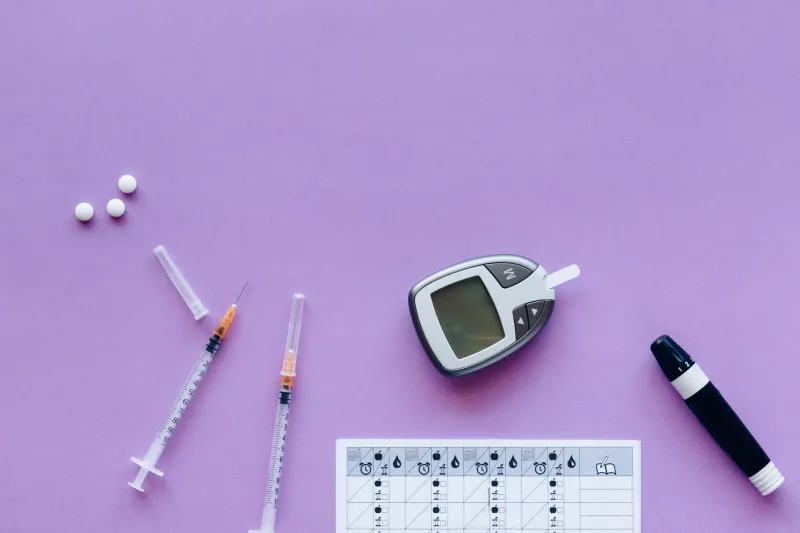
Among the adverse findings in MK-677 research, few receive as much attention as glucose metabolism. Fasting glucose rises, insulin sensitivity declines, and HbA1c can drift upward with sustained exposure. In most summaries, these effects are filed under "risk" and the discussion ends there. That framing may be premature — not because the metabolic changes are imaginary, but because interpreting them as pure pathology may misread what growth hormone physiology is actually doing.
What the Acromegaly Literature Teaches
Acromegaly — the condition of chronic growth hormone excess — is the natural experiment closest to sustained GH elevation. It is associated with insulin resistance and diabetes, and this association anchors the concern about MK-677. But endocrinology's more nuanced reading is instructive: GH and insulin sit in a dynamic, reciprocal relationship. GH antagonizes insulin's suppression of hepatic glucose output and shifts substrate metabolism toward fat oxidation, sparing glucose. The resulting insulin demand is, in a meaningful sense, an adaptive response to a deliberate hormonal state.
The same logic appears in GH replacement research. In growth hormone-deficient adults, initiating GH therapy transiently worsens insulin sensitivity before metabolic adaptation and body-composition changes — reduced visceral fat, improved lean mass — partially offset the effect over time. The early glucose signal is not evidence of a failing system; it is evidence of a system adjusting.
Why This Matters for MK-677 Interpretation
Most MK-677 trials measuring glucose outcomes are short. They capture the acute phase — the period when GH elevation is newly imposed and insulin's counter-regulation is at its least efficient — without observing whether adaptation follows. Reading a twelve-week glucose bump as a fixed property of the compound assumes no adaptation occurs, an assumption the longer-duration GH literature does not uniformly support.
This is not an argument that the signal is benign in all contexts. Individuals with existing insulin resistance, prediabetes, or type 2 diabetes have less metabolic headroom to absorb a GH-driven increase in insulin demand, and elevations in that population warrant genuine caution. Context, baseline status, and duration all determine whether a given glucose change is noise, adaptation, or pathology.
Reframing the Research Question
A more productive framing treats MK-677's metabolic effects as a coupled system: appetite signaling, GH pulsatility, IGF-1 elevation, and insulin dynamics are not independent findings to be ranked good or bad, but interacting outputs of a single hormonal shift. Questions worth asking include: Does insulin sensitivity recover or continue declining with prolonged exposure? Does body recomposition eventually counterbalance hepatic glucose output? Do baseline metabolic characteristics predict who adapts and who does not?
The reflex to label insulin changes as "damage" flattens a physiological conversation the endocrinology literature has been having for decades. Growth hormone has always traded short-term glucose economy for long-term substrate remodeling. MK-677 inherits that trade-off — and the research community would be better served describing it accurately than condemning it reflexively.