Clockwork Hormones: How the Timing of MK-677 Administration Shapes GH Pulse Dynamics and Sleep Architecture
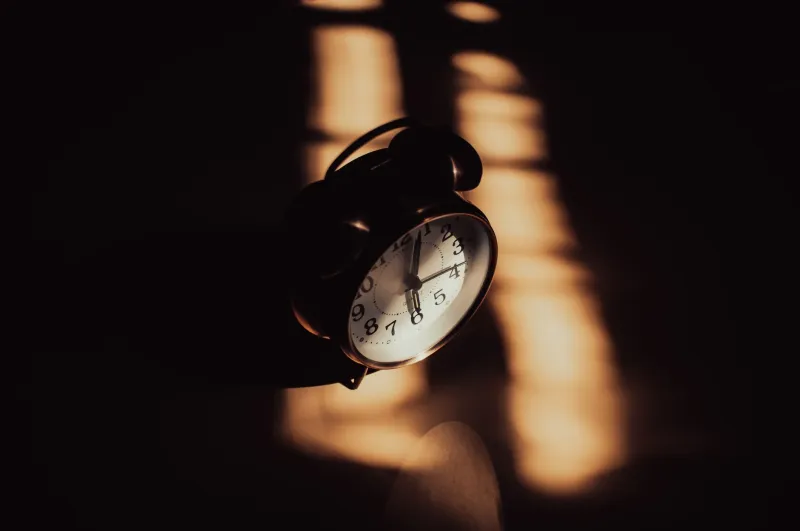
The human body does not experience time as a flat, undifferentiated continuum. Physiological processes — hormone secretion, cellular repair, metabolic regulation — unfold according to tightly coordinated biological rhythms anchored to the roughly 24-hour circadian cycle. Growth hormone (GH) is among the most clock-dependent of these secreted factors, with the majority of its daily output concentrated in discrete nocturnal pulses synchronized to deep sleep. For researchers studying MK-677, a long-acting ghrelin receptor agonist that potently stimulates GH and IGF-1 secretion, this temporal architecture raises a consequential question: does the timing of administration matter, and if so, how?
The answer, as the available evidence suggests, is more nuanced than a simple yes or no.
The Circadian Biology of Growth Hormone Secretion
Under normal physiological conditions, GH secretion follows a pulsatile pattern regulated by the interplay of two hypothalamic peptides: growth hormone-releasing hormone (GHRH), which promotes release, and somatostatin, which inhibits it. These peptides themselves operate on oscillatory schedules that are entrained to the light-dark cycle and modulated by sleep stage transitions.
The most robust GH pulse in healthy adults typically occurs shortly after sleep onset, coinciding with the first episode of slow-wave sleep (SWS), also called N3 or deep sleep. This pulse can account for 50 to 70 percent of total daily GH output in young adults. Subsequent pulses occur throughout the night and, to a lesser extent, during waking hours — though daytime pulses are generally smaller and less consistent.
Ghrelin, the endogenous ligand for the growth hormone secretagogue receptor (GHS-R1a), also fluctuates across the day. Plasma ghrelin concentrations rise before anticipated meals, peak in the late evening, and decline following food intake. This rhythm positions ghrelin as both a hunger signal and a nocturnal GH-release amplifier, reinforcing the overnight secretory surge.
MK-677 mimics ghrelin's receptor-level activity without the peptide's short plasma half-life, producing sustained GHS-R1a stimulation over 24 hours following a single oral dose. This pharmacokinetic profile is central to understanding how dosing time interacts with endogenous circadian rhythms.
Morning Versus Evening Administration: What the Data Indicate
The clinical literature on MK-677 dosing timing is not as extensive as researchers might prefer, but several studies and their secondary endpoints offer meaningful insight.
In early Phase I and Phase II trials — including foundational work by Thorner and colleagues and subsequent studies examining GH secretion patterns — MK-677 reliably elevated mean 24-hour GH concentrations and IGF-1 levels regardless of dosing time. However, the distribution of GH pulse amplitude across the day shifted depending on when the compound was administered.
Evening administration, typically defined as dosing in the one to two hours preceding sleep, appears to synchronize MK-677's peak receptor occupancy with the natural nocturnal GH surge. Because GHS-R1a stimulation lowers the threshold for GHRH-triggered GH release, administering MK-677 when endogenous somatostatin tone is already declining at sleep onset may produce a more pronounced amplification of the overnight pulse. Several researchers have noted that evening-dosed subjects in GH secretion studies show higher peak GH concentrations during the first three hours of sleep compared to morning-dosed counterparts, even when total daily IGF-1 AUC remains comparable.
Morning administration, by contrast, distributes GHS-R1a stimulation across the waking day. This may produce more uniform GH elevation throughout daylight hours but potentially blunts the amplitude of the primary nocturnal pulse by the time peak plasma concentrations of MK-677 have subsided. For researchers focused on anabolic or recovery-oriented outcomes, this temporal flattening could be mechanistically relevant, since the nocturnal GH pulse is most closely associated with tissue repair, protein synthesis, and the restoration of lean mass.
Sleep Architecture and the GH-SWS Relationship
The relationship between GH secretion and slow-wave sleep is bidirectional. GH release promotes SWS, and SWS in turn facilitates GH pulse generation — a feedback loop that makes sleep quality both a dependent and independent variable in any analysis of GH-modifying compounds.
Polysomnographic data from MK-677 studies, most notably the work of Van Cauter's group examining GH secretagogues in healthy and older adults, demonstrated that MK-677 administration increased SWS duration and enhanced REM sleep in certain populations. These effects were most pronounced in older subjects, whose baseline SWS architecture is typically degraded relative to younger adults. The implication is that MK-677 may partially restore the sleep-GH axis in aging populations — but the magnitude of this effect may be sensitive to dosing time.
When MK-677 is dosed in the evening such that plasma concentrations are rising as the subject enters the first sleep cycle, the compound's GHS-R1a activity coincides with the physiological window during which SWS initiation is most likely. This temporal alignment may reinforce the GH-SWS feedback loop rather than working against it. Morning dosing, while still capable of elevating GH across the day, may not engage this loop as efficiently, particularly if plasma MK-677 concentrations have declined substantially by the time the subject attempts sleep.
Appetite Signaling as a Confounding Variable
One complication that researchers must account for when evaluating evening dosing is the appetite-stimulating effect of MK-677. Because ghrelin receptor agonism increases hunger — an effect that is often more pronounced in the hours immediately following administration — evening dosing may introduce caloric intake variability that complicates interpretation of body composition outcomes. Subjects who dose before bed and subsequently consume additional calories could experience confounded results in studies attempting to isolate the anabolic effects of enhanced GH secretion.
This is not a trivial concern in research design. Controlling for pre-sleep caloric intake in evening-dosed MK-677 protocols requires explicit dietary standardization, a variable that is not uniformly reported in the existing literature.
Chronopharmacology and the Case for Personalized Timing
The field of chronopharmacology — the study of how biological timing affects drug efficacy and tolerability — has grown considerably in recent years, with applications across oncology, cardiovascular medicine, and endocrinology. MK-677 represents a compelling subject for chronopharmacological investigation precisely because its target system, the GH axis, is so deeply embedded in circadian biology.
The available evidence suggests that evening administration is more likely to amplify the physiologically significant nocturnal GH pulse and reinforce SWS architecture, while morning administration may produce more temporally distributed GH elevation with less direct engagement of the sleep-recovery axis. Neither approach is inherently superior for all research contexts — the optimal timing depends on the specific outcome being measured and the population under study.
For researchers designing MK-677 protocols, the circadian dimension is not an afterthought. It is a mechanistic variable with real implications for how the compound's effects are expressed, measured, and interpreted. Standardizing dosing time within and across studies is a methodological prerequisite for generating data that is both internally consistent and externally comparable.
As the field matures and longer-duration trials accumulate, chronobiological subgroup analyses may yet reveal dosing-time interactions that current aggregate data obscure. Until then, the temporal question remains one of MK-677 research's most underappreciated dimensions.